
 Getty ImagesSave this storySave this story
Almost every day, I scroll through Olive Young’s Korean website like it’s TikTok. I’m always on the hunt for emerging K-beauty trends, and the best-selling products and ingredients at the South Korean mega-retailer tend to influence beauty shelves here in the US months later.
In February, I started noticing an onslaught of sky-blue formulas designed for sensitive skin hitting Olive Young’s virtual shelves. They all touted the same ingredient: azulene. (You might see it listed on product labels as guaiazulene, the stabilized form most commonly used in skin care, says Kunal Malik, MD, a board-certified dermatologist in New York City.)
Intrigued, I reached out to Hee Jin Kim, MD, one half of a sister duo that runs PureenMD Skin and Well-Aging Center, with locations in Fort Lee, New Jersey, and Seoul, to find out whether azulene is poised to be K-beauty’s next trendy ingredient based on what she's seeing in her South Korea office.
“Yes, very much so,” confirmed Dr. Kim. “Many Korean beauty [content creators] have been actively reviewing azulene-containing products recently, particularly those focused on calming and post-procedure care.” One creator in particular, Inssi, is often credited for sparking the rising popularity of azulene. She has posted several videos over the past year highlighting the ingredient’s skin-cooling and blemish-soothing powers.
I marveled at how quickly the products visibly calmed her redness. Much like a dog that barks at every little noise and passerby, my skin is reactive. The wind, temperature changes, and even a light touch can trigger redness and sensitivity. I’m also prone to painful hormonal breakouts, so my skin is the ultimate litmus test for any new calming ingredient, and I immediately knew my routine needed some azulene.
 Save to wishlist
Dr. Althea
Aqua Marine Deep Serum
Amazon
Ulta Beauty
Olive Young
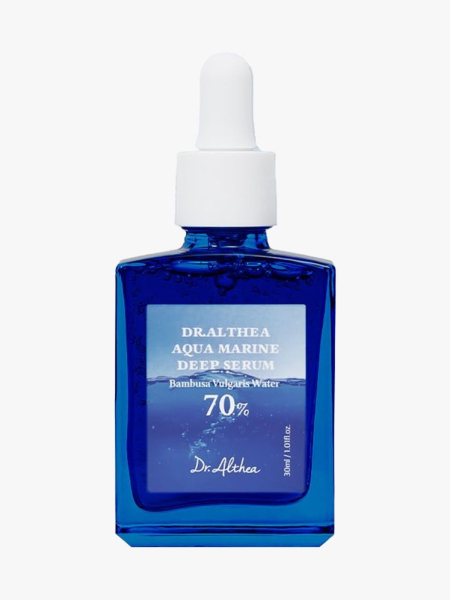
One problem: Many of Korea’s buzziest azulene formulas aren’t available just yet stateside, but there are a few options available to US consumers. I got my hands on the Dr. Althea Aqua Marine Deep Serum. My skin loved the cobalt-blue formula so much that I recommended it to my sister, whose skin is even more reactive than mine. She went through a whole bottle in less than a month because she was reaching for it every morning, night, and after working out.
Ahead, experts explain exactly what azulene is and how it works to soothe skin.
What is azulene, and what are its benefits?
Azulene is a naturally occurring, deep-blue hydrocarbon most commonly extracted from chamomile, says Y. Claire Chang, MD, a board-certified dermatologist based in New York City. Even though chamomile blooms with little white flowers and turns water golden when steeped as tea, it contains this special compound that tints skin-care products varying shades of blue, depending on how much is used in the formulation.
Beyond giving moisturizers and serums a striking color, the ingredient also offers anti-inflammatory benefits. “This makes it particularly useful for those with sensitive or reactive skin,” says Dr. Chang. It’s especially beneficial on days when your skin is flushed or hot to the touch due to a compromised skin barrier, she adds. This could happen after laser treatments, over-exfoliating, sun exposure, or during rosacea flare-ups.
Clinical studies published over the past five years also show that combining azulene with ceramides can boost hydration, reduce roughness, and relieve itching, says Dr. Malik. A 2022 study found that the combination significantly improves skin moisture levels and sleep quality (due to reduced itching) in patients with atopic dermatitis, which causes chronically dry skin.
So, it’s like cica?
Not exactly. Like azulene, cica (also known as centella asiatica) is a K-beauty favorite for its skin-soothing properties. But that’s just a fraction of what it offers. Cica also helps with wound healing, barrier repair, and brightening, making it a go-to ingredient for addressing acne and hyperpigmentation. Cica contains multiple bioactive compounds that help calm inflammation, provide antioxidant benefits, and support collagen synthesis, Dr. Chang explains.
The reason for cica’s wider range of skin-care benefits is that cica is a whole botanical extract, while guaiazulene is a single derivative, says Laura Lam-Phaure, a Los Angeles-based cosmetic chemist. And azulene hasn’t been proven to stimulate collagen production, improve hyperpigmentation, or treat acne directly. “Think of azulene as a targeted anti-inflammatory agent,” Dr. Malik says. “It’s excellent for immediate soothing, but it’s not as multifunctional [as cica].”
 Save to wishlist
Mamonde
Calming Shot Azulene Ampoule
Yesstyle
Olive Young
Stylevana
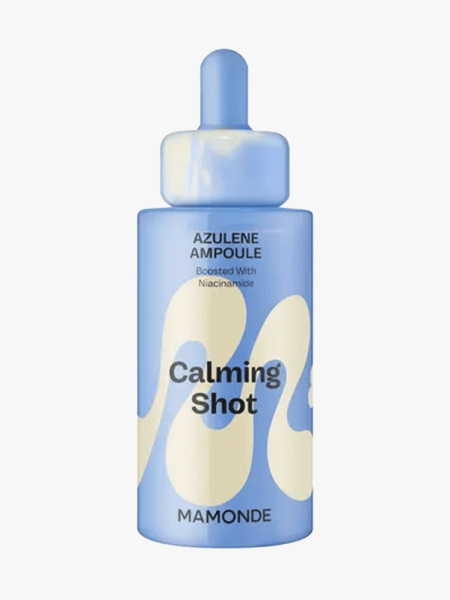
According to Dr. Kim, these differences are often an advantage. Some of her patients experience irritation or allergic reactions to cica, so azulene can serve as an effective alternative, she says. Plus, the Mamonde Calming Shot Azulene Ampoule, which won an Allure Korea 2025 Best of Beauty Award in the brightening ampoule category, claims that azulene soothes skin faster than cica.
How often should I use azulene skin care?
In addition to reaching for an azulene-packed product when your skin barrier is compromised, you can also use it as a proactive measure. It can help prevent the inflammation that often accompanies powerful yet potentially irritating ingredients like retinol, vitamin C, and exfoliating acids. “Because of its calming properties, an azulene-containing serum or essence is excellent after cleansing to prepare the skin for more active ingredients,” Dr. Chang says.
Shop expert-approved azulene products
Serum
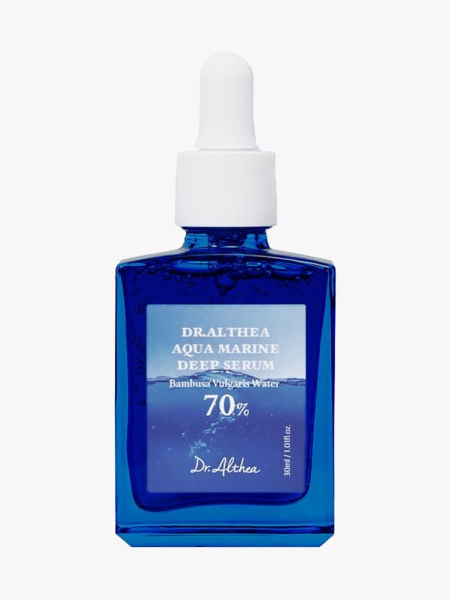
My top azulene recommendation is the aforementioned Dr. Althea Aqua Marine Deep Serum. My sister, Taylor, and I love its refreshing, watery texture that’s absorbed in seconds. Even on the most freezing days when the radiator is on full blast, this serum gives a dewy glow without making me break out or triggering Taylor’s eczema. I don’t wear foundation, so I appreciate how well it reduces redness and adds glassiness to my skin. The fragrance-free formula is also infused with panthenol, niacinamide, and hyaluronic acid, ingredients that Dr. Chang suggests pairing with azulene to maximize barrier support and hydration.
 Save to wishlist
Dr. Althea
Aqua Marine Deep Serum
Amazon
Ulta Beauty
Olive Young
 Save to wishlist
Klairs
Midnight Blue Youth Activating Drop
Amazon
Soko Glam
Yesstyle
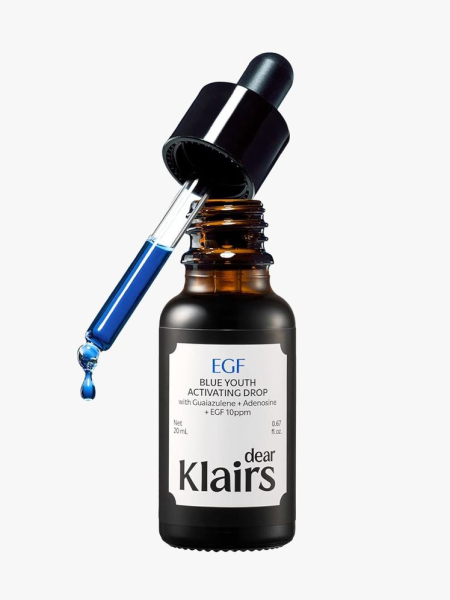
Dear Klairs Midnight Blue Youth Activating Drop has become popular in Korea, thanks to Inssi. (She’s so associated with it that she’s become the face for the product on Olive Young’s website.) The serum counts Dr. Kim as a fan because it also contains growth factors (EFG peptides) to provide long-term repair. Plus, its lightweight gel texture “absorbs almost instantly,” so it’s Dr. Kim’s top pick for patients with stressed or redness-prone skin who want “calming benefits without feeling any residue.”
Moisturizer
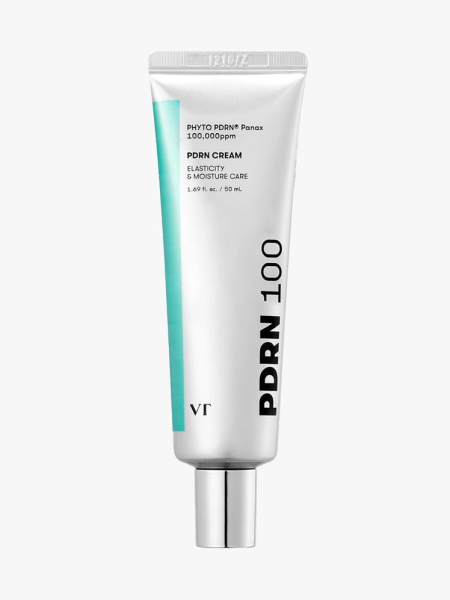
If you’re looking for a moisturizer with the ingredient, try VT Cosmetics PDRN Cream 100. I love how rich, cushiony, and comforting this cream feels—and Dr. Kim does, too. “I tend to recommend this for drier skin types or when the skin barrier is compromised and needs additional nourishment,” she says.
 Save to wishlist
VT Cosmetics
PDRN Cream 100
Amazon
Nordstrom
Ulta Beauty
Eye cream
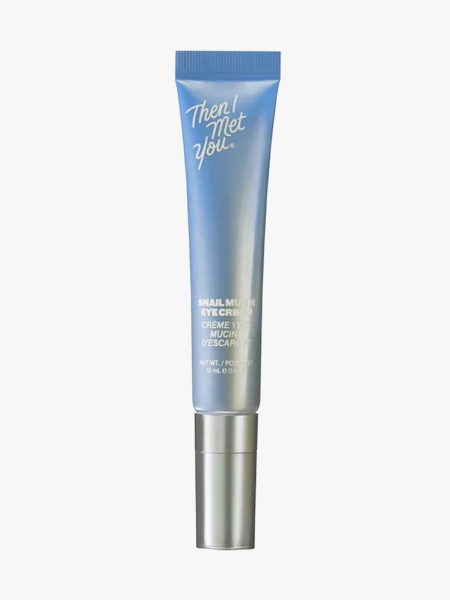
If your eye area is where you experience the most inflammation, I suggest checking out Then I Met You Snail Mucin Eye Cream. Azulene teams up with snail mucin, the original trendy K-beauty ingredient, so soothing moisture grips onto that delicate skin, keeping the product from migrating into sensitive eyes.
 Save to wishlist
Then I Met You
Snail Mucin Eye Cream
Sephora
Soko Glam
My fingers are crossed that Mamonde’s collection will land in the US soon. And while we wait for more azulene products to hit shelves, it’s important to keep in mind that “just as with anything else, azulene isn’t a miracle ingredient,” Dr. Malik says. “It works best as a part of a comprehensive routine rather than a standalone treatment. It's a welcome addition for helping manage sensitive and reactive skin.”
Meet the experts
- Y. Claire Chang, MD, is a board-certified dermatologist at UnionDerm in New York City.
- Hee Jin Kim, MD, is a board-certified physician and the medical director of PureenMD Skin and Well-Aging Center in Fort Lee, New Jersey, and Seoul.
- Laura Lam-Phaure is a cosmetic chemist based in Los Angeles.
- Kunal Malik, MD, is a board-certified dermatologist at Spring Street Dermatology in New York City.
How we test and review products
When Allure tests a product, our editors look at it from every angle in an effort to best serve you. We review ingredients, scrutinize brand claims, and, when necessary, examine peer-reviewed scientific and medical studies. In addition to testing each and every product that's included in each and every review, we rely on experts who shape their fields, including dermatology, cosmetic chemistry, and medicine, to help us vet the ingredients and formulas.
For our list of the best azulene products, we considered each product's performance across five primary categories: product ingredients and efficacy, packaging, fragrance, texture, and product wear. Every product was determined to have excelled in each category by our editorial team, which is composed of in-house writers and editors as well as contributors—along with special consideration from board-certified dermatologists. To learn more information on our reporting and testing processes, read our complete reviews process and methodology page.
Our staff and testers
A beauty product is a personal purchase. You might be searching for a face cream to address persistent dryness or a new nail product to add to your Sunday self-care routine; you may simply be browsing around for the latest launches to hit the hair market. No matter what you seek or your individual needs and concerns, Allure wants to ensure that you love anything we recommend in our stories. We believe that having a diverse team of writers and editors—in addition to the wide range of outside testers and industry experts we regularly call upon—is essential to reaching that goal.
After all, can we really say a skin-care product is the "best" for people over 50 if the only testers we've solicited opinions from folks who have yet to hit 30? Can we honestly deem a high-end diffuser worthy of your hard-earned cash if it’s never been tested on curls? We're proud that our staff spans a wide range of ages, skin tones, hair textures, genders, and backgrounds, which means that we are able to fairly assess any beauty product that comes into the beauty closet.